
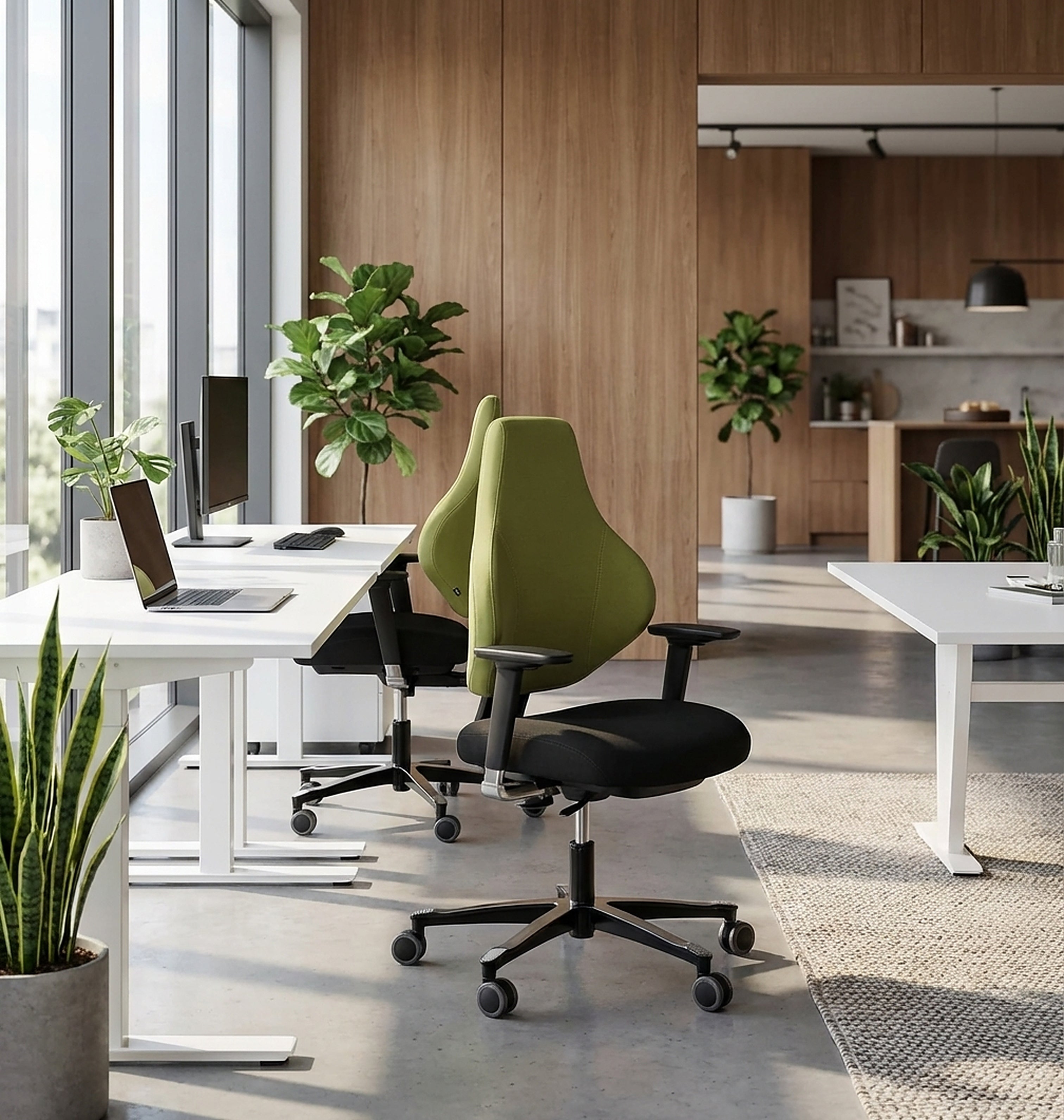
Active sitting is an ergonomic posture principle in which the body keeps shifting and changing position while seated, instead of staying rigidly still. The chair follows the movement of the torso: the backrest tilts naturally and the seat adapts to the user's weight and micro-movements. The result is lower static load on the spine, better circulation and more relaxed sitting throughout the workday. Ergonomists recommend active sitting because the human body is not designed for long periods of stillness in a single posture.
At Heka Interior, the office-furniture brand of Hit Preless d.o.o. from Slovenia, we treat active sitting as the foundation of a healthy workplace. Hit Preless has produced furniture since 1986, has more than 80 employees and runs its own production, logistics and installation in Slovenia. Our ergonomic solutions equipped more than 1,200 workstations at NLB, and our references also include Triglav and Volvo. We build this experience into every recommendation we make about choosing a chair for active sitting.
What is active sitting?
Active sitting is a modern approach to office ergonomics in which the chair follows the body's natural micro-movements instead of holding it in a rigid posture. While you work, your torso shifts constantly, from a slight lean forward when typing to leaning back when thinking. An active ergonomic chair follows these movements synchronously, the spinal support stays constant and the stabilising muscles remain subtly engaged. This keeps sitting dynamic and relieves the spine more than static stillness in a conventional chair.
The opposite of active sitting is static sitting in rigid chairs, where the body stays in the same posture for hours. This tires the muscles, builds up pressure on the intervertebral discs and reduces circulation in the legs.
Why do ergonomists recommend active sitting?
Ergonomists recommend active sitting because it relieves the static loads that build up during long periods of stillness. A dynamic posture distributes pressure on the spine more evenly, micro-movements in the seat stimulate circulation in the legs, and the core stabilising muscles stay engaged without conscious effort. General ergonomic principles suggest that this way of sitting reduces the feeling of afternoon fatigue and supports a more natural spinal axis even outside working hours.
It is important to understand that an active chair does not replace movement. Even with the best chair, ergonomists recommend standing up for a few minutes every hour to walk or stretch. Active sitting and regular breaks complement each other.
How does active sitting differ from ordinary sitting?
The main difference is the ratio between the backrest and the seat. With a classic rocking mechanism, the backrest and seat move together at the same angle when you lean back, so your feet lift off the floor and your thighs lose support. With an active synchronous mechanism, usually in a 2:1 ratio, the backrest tilts twice as fast as the seat: the body gains movement while the feet keep stable contact with the floor. The second key difference is a dynamic, sliding seat that allows forward and backward adjustment.
What are the benefits of active sitting?
Active sitting brings several expected ergonomic effects that come from a dynamic posture instead of rigid stillness. The main benefit is lower static load on the lumbar spine, which relieves the intervertebral discs. This is followed by better circulation, gentle activation of the core muscles and longer focus throughout the day.
- Lower static load on the lumbar spine and relief for the intervertebral discs.
- Better circulation in the legs, as micro-movements in the seat stimulate blood flow.
- Effortless activation of the core and back stabilising muscles.
- Longer focus and less fatigue in the afternoon hours.
- Gradual improvement in posture, because the chair constantly supports a correct spinal axis.
Read more about setting the chair up correctly for these effects in the guide on how to adjust an office chair.
Which chair enables active sitting?
Active sitting is only possible with an ergonomic chair that has the right mechanical components; not every ergonomic chair is also an active chair. A true active chair must have a synchronous mechanism in a 2:1 ratio that links the backrest and seat in a natural human movement, plus a sliding seat plate that lets you adjust seat depth to thigh length. The most advanced models add an activated seat movement in several directions for even more dynamic sitting.
Other important elements are an adjustable lumbar support, 4D armrests, a breathable mesh backrest and an integrated headrest to relieve the neck. The guide on how to choose an office chair or the overview of office chairs with lumbar support will help you choose.
How do I recognise a true active chair during a trial?
You can recognise a true active chair through five practical checks during a trial. Lean the backrest back and watch whether the seat follows only partly, which confirms an active synchronous mechanism rather than a simple rocking one. Push the seat forward to test the sliding plate, sit for at least ten minutes, feel how solid the mechanism is under the seat, and check the warranty. Heka gives a three-year warranty on all chairs with its own production, which also ensures spare parts after the warranty ends.
- Lean the backrest back: the seat should follow only partly, not at the same angle.
- Push the seat forward: the sliding plate should allow at least a few centimetres of travel.
- Sit for ten minutes: a true active chair breathes with you through subtle micro-movements.
- Feel the mechanism: quality chairs have a solid housing and a clear tension-adjustment knob.
- Check the warranty: premium ergonomic chairs offer at least three years of cover.
Do active chairs help with back pain?
For people who work long hours at a desk and feel occasional pain in the lumbar or sacral area, active sitting often helps reduce static loads, provided the chair is correctly adjusted to the user. An active chair does not replace movement and is not a cure. For users with acute pain, ergonomists recommend consulting a doctor or physiotherapist before deciding to buy.
The best way to check whether an active chair suits your body is to try it in a real environment. At Heka we offer a free 7-day trial of the chair at your workplace; if the chair does not suit you, we collect it back at no cost.
How long does it take to adapt to active sitting?
Most users adapt to a new synchronous mechanism within a few days. In the first days you may feel a slight effort in the stabilising muscles, which is normal and means your body is waking up from a passive posture. After about a week most users report a feeling of natural posture that requires no conscious attention. This is exactly why the free trial lasts seven days: it is precisely the period in which you can tell whether the chair works for your body.
Frequently asked questions
Is active sitting suitable for everyone?
Active sitting is suitable for most healthy adults. The exceptions are people with acute spinal injuries or specific medical conditions, where ergonomists recommend a prior consultation with a doctor. For growing children there are special children's ergonomic chairs that support active sitting while studying at home.
Does an active chair replace a standing desk?
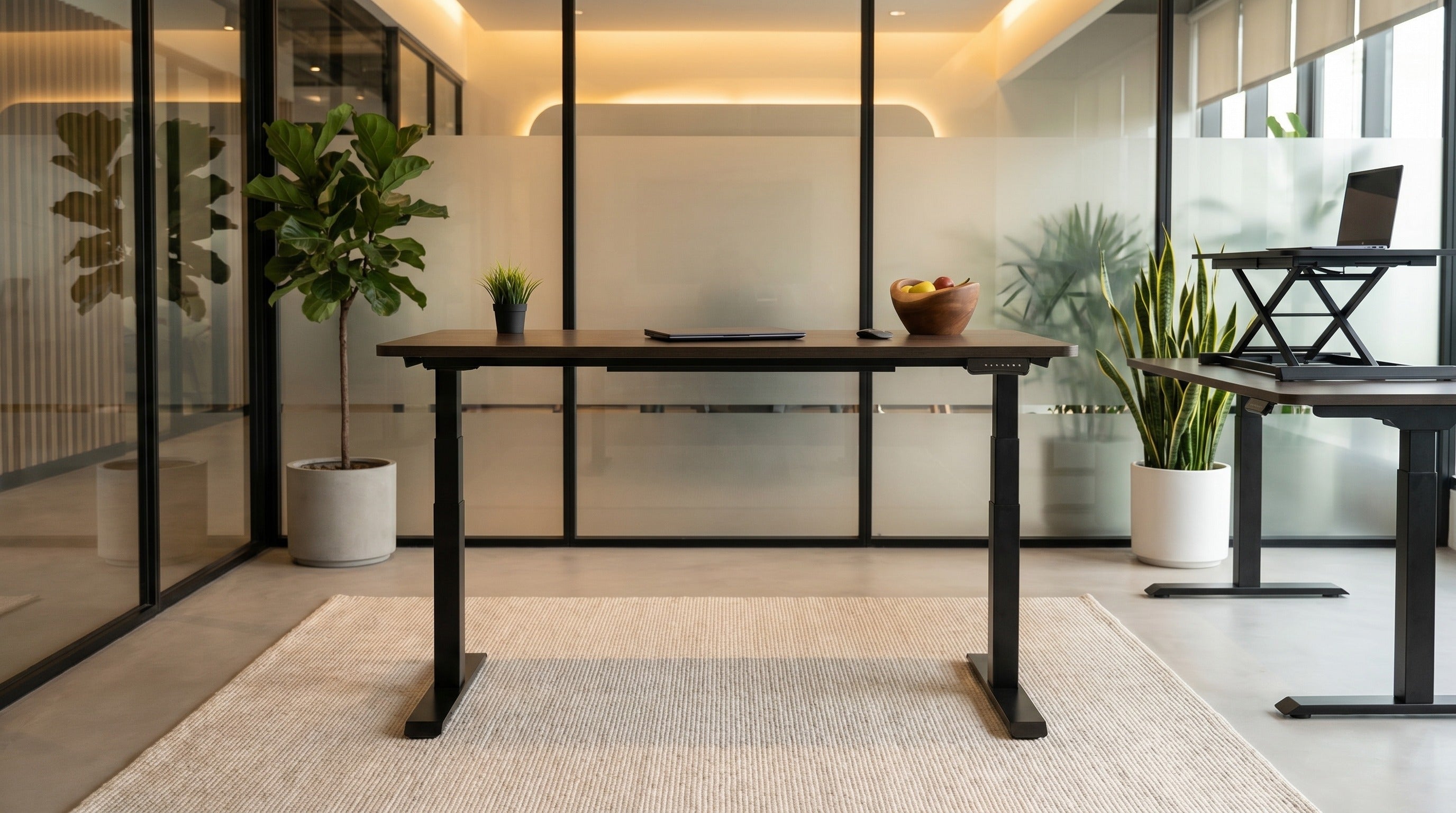
No, an active chair and a standing desk are complementary tools. An active chair enables dynamic sitting, while a standing desk lets you switch between sitting and standing during the day. An optimal workplace combines both. Read more about whether the investment pays off in the guide on whether a standing desk is worth it.
How much does an active ergonomic chair cost?
The price of an active ergonomic chair depends on the configuration, the choice of fabric, base and accessories, so most models are offered on request. Heka chairs are in the premium segment with their own production in Slovenia and full personalisation. For the current offer, view our office chairs or send an enquiry through the contact form.
Can I configure an active chair to order?
Yes, with every Heka chair you choose the fabric, colour, base and optional accessories, and for larger projects also corporate colours or a company logo on the backrest. Full personalisation is possible thanks to our own production in Slovenia. For larger projects and office fit-outs, our page for architects and designers provides technical files and advice.
Try active sitting for free
The best way to get to know active sitting is to try it in your own work environment. Choose a chair from the Heka office chairs and we will deliver it to your address for a free 7-day trial. If the chair does not suit you, we collect it back at no cost. For advice on your choice or a larger project, contact us through the contact form; you can see an example of our work in the reference on NLB Emona BTC with 1,200 workstations.

Share:
How to choose an ergonomic chair for the office: guide 2026 | Heka
How to adjust an office chair in 7 steps