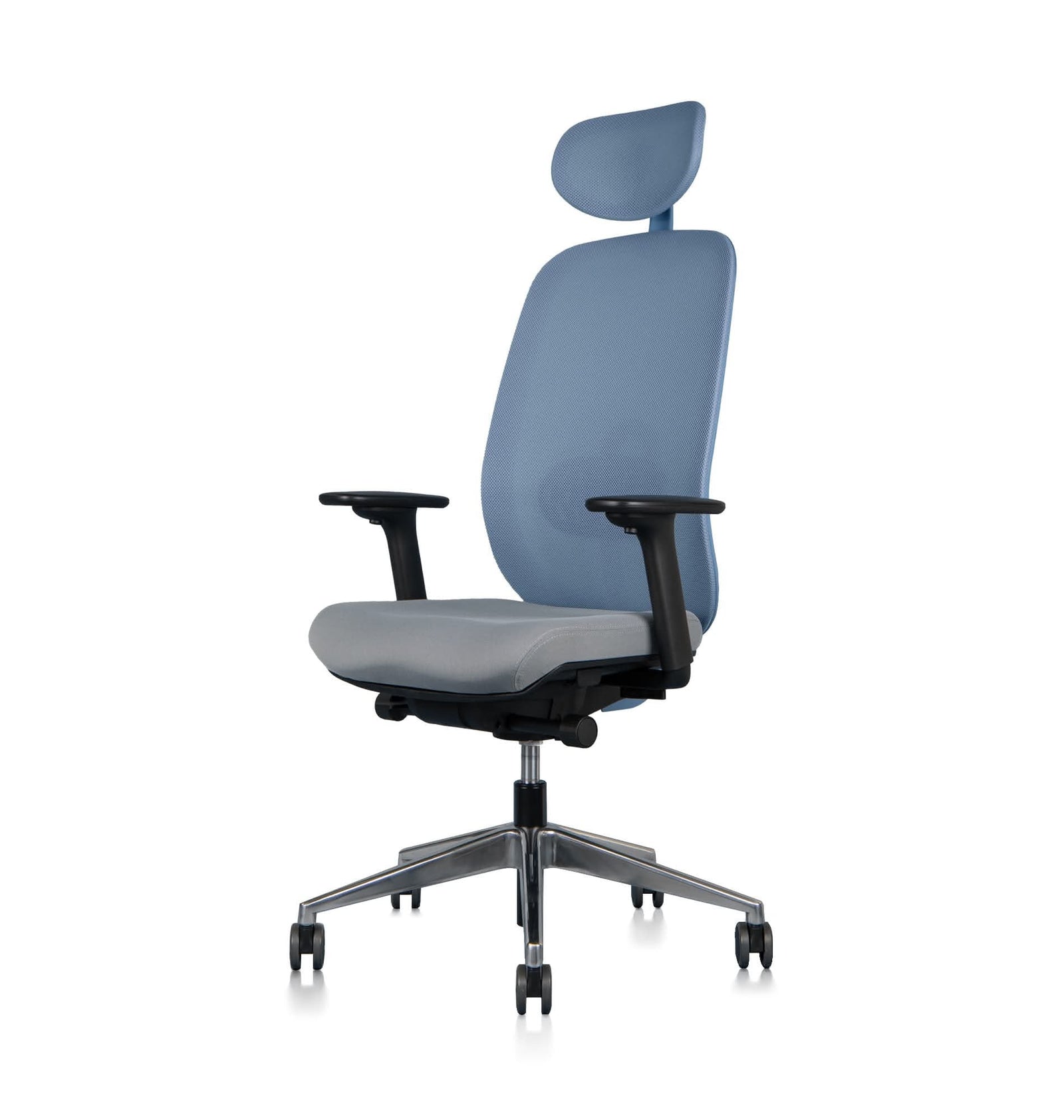
You choose an active ergonomic chair by first deciding on the type of active sitting (swaying, saddle or balance chair), then checking whether the seat moves freely, what the price range is and who the model is intended for. In practice, this means matching your way of working and your budget to a specific model, and trying it out before you buy. Below we compare the types and the actual Heka models so you can quickly find the right one.
If you first want the background, read the explanatory guide on what active sitting is and why ergonomists recommend it. This article, however, focuses on something else: on choosing and buying a specific chair.
What exactly is an active ergonomic chair?
An active ergonomic chair is a seat that does not lock you into a single position while you sit. The seat tilts slightly, sways or moves freely, which allows the body to make micro-movements and gives the pelvis free movement. Instead of sitting completely still all day, the chair gently encourages you to change your posture.
Unlike a classic office chair, where the emphasis is on support and staying still, here the emphasis is on movement. We describe the difference between the two approaches in more detail in the guide ergonomic versus ordinary office chair.
Types of active sitting and who they suit
Before buying, it is good to know which type of active sitting actually suits you. Each one works differently and is suited to a different way of working.
- Swaying chair has a movable base or mechanism that allows gentle swaying forward, backward and sideways. It is suitable for longer work at a desk where you want movement without instability.
- Saddle chair has a saddle-shaped seat that opens up the angle between the torso and thighs and encourages an upright pelvis. It is often chosen by dentists, hairdressers and everyone who works leaning forward.
- Balance chair has no classic backrest; part of the weight is taken by the knees or feet, which activates the torso. It is suitable for shorter switches between positions, less so for whole days.
- Stool or active perch is a tall seat with a swaying base, ideal next to a height-adjustable desk for working alternately sitting and standing.
How to choose an active ergonomic chair in five steps
The choice is simpler if you go step by step. We suggest the following sequence of considerations:
- Define your way of working: all day at a desk, alternating sitting/standing, or working leaning forward.
- Choose the type of sitting (swaying, saddle, balance, stool) according to your way of working.
- Check the adjustability: height, seat tilt, possible backrest.
- Set a budget and find a model in that range.
- Try the chair at your own place before you decide. Active sitting is a matter of feel.
That is exactly why Heka offers a 7-day free trial, so you can first test the chair in your own environment.
Comparison of Heka active models and prices
Heka active chairs cover a range from an affordable entry-level model to the highest class. The table below compares the starting prices and who each model suits best. All prices are starting prices and depend on the choice of fabric, colour and base.
| Model | Starting price | Who it suits |
|---|---|---|
| Orange | from approximately €128 | entry into active sitting, a stool for the height-adjustable desk, an affordable budget |
| Logic | from approximately €377 | everyday active sitting at a desk with a good ratio of price and features |
| ErgoFlex | from approximately €482 | those who want pronounced tilting and dynamic sitting throughout the day |
| Clever Evo | from approximately €531 | users who want two sitting modes in one chair |
| MOVE.me | from approximately €631 | the highest class for demanding users and long working days |
You can find the full selection in the collection active ergonomic chairs, where you can filter by price and features.
Price ranges: how much does an active chair cost?
Active ergonomic chairs cover a wide range. For easier orientation, we divide them into three classes.
- Entry level (up to approximately €200): an affordable entry into active sitting, often in the form of a stool or active perch, such as Orange.
- Mid range (approximately €350 to €500): chairs for everyday, all-day work with more adjustments, such as Logic and ErgoFlex.
- Higher range (above approximately €500): models with advanced mechanisms and several sitting modes, such as Clever Evo and MOVE.me.
When choosing, it is not only the price that matters, but also how many hours a day you will use the chair. For all-day work, an investment in the mid or higher range usually pays off.
Is an active chair suitable for a whole working day?
Yes, but gradually. Introduce active sitting in shorter intervals and gradually extend the time. Many people combine it with a classic ergonomic chair and a height-adjustable desk, so that they change positions throughout the day: some time sitting actively, some time standing, some time on a classic ergonomic office chair.
This way you include more movement without relying on a single position. An active chair encourages movement and supports a dynamic posture, but you get the most out of it when you use it as part of a larger work setup.
What to watch out for when buying an active chair?
Active chairs differ quite a lot from one another, so before buying it is good to check a few practical features. The right model is the one that adapts to your body and way of working, not the other way around.
- Height adjustability: the chair must reach a range that fits your build and the height of your desk or height-adjustable desk.
- Degree of mobility: some models sway in all directions, others only back and forth. More movement means more active sitting, but also a longer adjustment period.
- Base and stability: check whether the chair has castors or a fixed base and whether it is suitable for your flooring.
- Upholstery and fabric: at Heka you choose between different fabrics and colours, and we make the product to suit the space.
- Adjustment period: the body gets used to active sitting gradually, so it is important to first try the chair in practice.
That is exactly why we offer a 7-day free trial – place the active chair in your own workspace and check at your leisure whether it suits you before you decide.
Active chair and height-adjustable desk: a winning combination
An active seat complements a desk where you switch between sitting and standing perfectly. A tall active stool allows supported sitting at a higher work surface, while the swaying base keeps your legs in motion.
If you are building such a setup, take a look at height-adjustable desks and especially the selection of chairs for height-adjustable desks. You can also find general advice on choosing a seat in the guide how to choose an office chair.
Why an active chair from Heka
Heka Interior is a Slovenian office furniture brand of the company Hit Preless d.o.o., with production in Medvode and more than 40 years of experience. This means we make the chairs ourselves and adapt them if needed.
- Slovenian production and custom manufacturing (fabrics, colours).
- 7-day free trial of the chair in your own environment.
- 3-year warranty on the products.
- Our own delivery and assembly.
- References including NLB (1,200+ workstations), Triglav and Volvo.
Frequently asked questions
Which active ergonomic chair is best for a beginner?
For the first step into active sitting, an affordable model such as Orange from approximately €128 makes sense. You start with shorter intervals and gradually extend the time of active sitting. More important than choosing the most expensive model is to actually try it in practice.
How much does an active ergonomic chair cost?
At Heka, active chairs start from approximately €128 for the entry-level Orange model and go up to approximately €631 for the highest-class MOVE.me. The final price depends on the choice of fabric, colour and base.
Can I try an active chair before buying?
Yes. Heka offers a 7-day free trial so you can use the chair in your own work environment before you decide. Since active sitting is above all a matter of feel, a trial is the best way to make the right choice.
Is a saddle chair suitable for the office?
A saddle chair is most useful for work where you lean forward or stand up frequently, for example with dentists and hairdressers. In a classic office for computer work, many people prefer a swaying chair with a backrest, as it offers movement and support at the same time.
Ready to choose?
Take a look at the full selection in the collection active ergonomic chairs and choose the model that suits your way of working and your budget. Once you decide, take advantage of the 7-day free trial and first check the chair at your own place, risk-free.

Share:
Waiting Room Chairs: How to Choose the Right Seating