
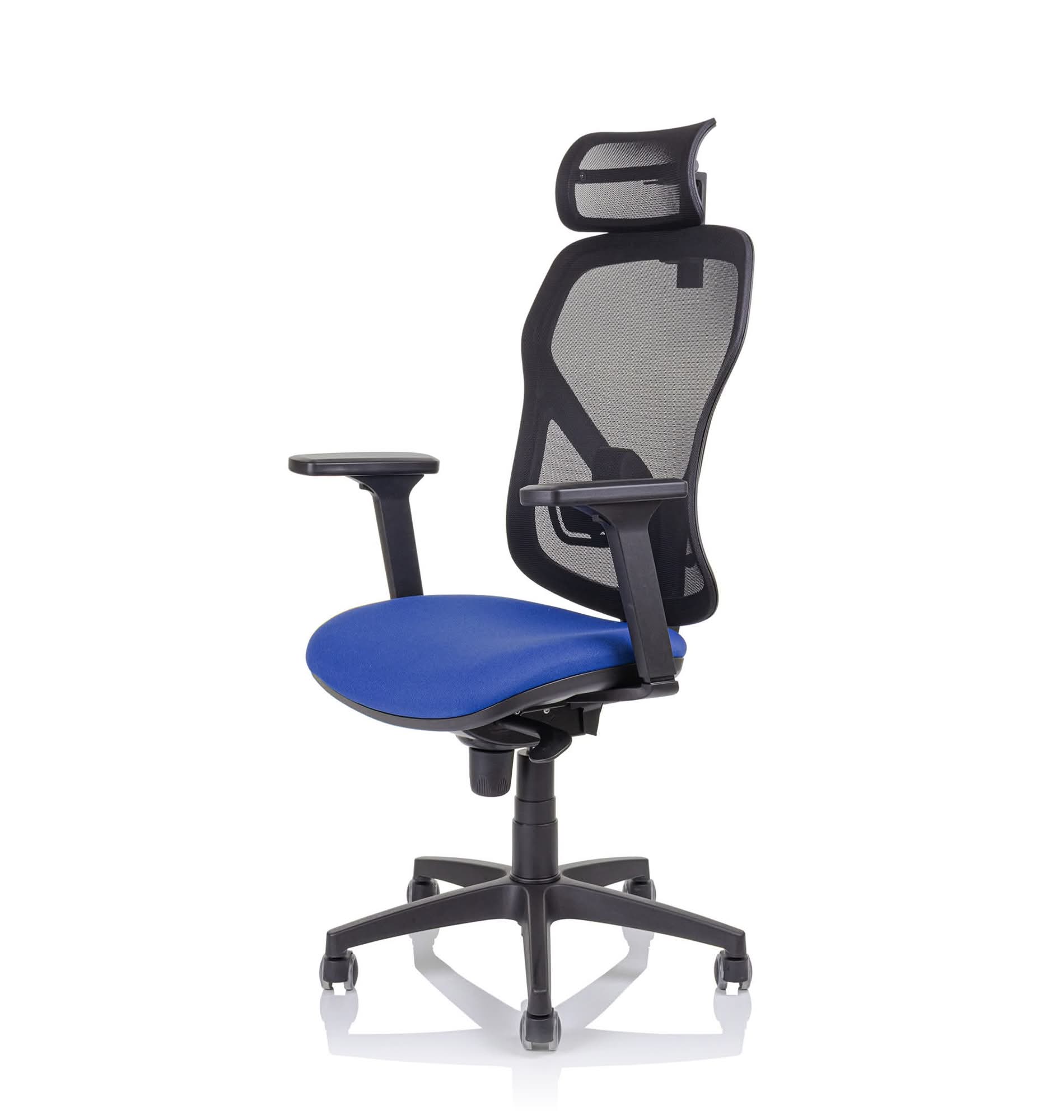
If you spend several hours a day at a desk, an ergonomic office chair is one of the investments that most directly affects your well-being, focus and spinal health. At first glance, the difference between an ergonomic and a standard chair seems to come down to price and the number of levers, but in reality these are two completely different approaches to sitting. A standard chair simply keeps you off the floor, while an ergonomic chair adapts to your body, your movement and your work habits. In this guide we compare both types across the key criteria: adjustability, back support, long-term costs and the impact on health during long hours of sitting.
What "ergonomic" actually means in a chair
The word ergonomics describes adapting the work environment to the person, not the other way around. In a chair this means it is designed to support the natural curve of the spine, allow several sitting positions and reduce the load on the vertebrae, neck and legs. A standard office chair usually has a fixed backrest, a single height setting and a flat seat with no adjustment.
An ergonomic chair, on the other hand, offers several points of adjustment at once: seat height, seat depth, lumbar support, backrest tilt and resistance, and often a headrest and adjustable armrests. The goal is simple: to let you adjust the chair to yourself in a few minutes, rather than having you adjust to the chair all day. If you are just starting to choose, our guide on how to choose an office chair will help, walking you step by step through measuring and settings.
Adjustability: where the biggest difference lies
Adjustability is the most obvious dividing line between the two types. With a standard chair you can usually adjust only the seat height, while everything else is fixed. This means the chair will always be a compromise for someone tall or short, wider or narrower.
With an ergonomic chair you can adapt every element to your body. The table below shows the typical differences in adjustability.
| Element | Standard chair | Ergonomic chair |
|---|---|---|
| Seat height | Yes | Yes |
| Seat depth | No | Yes (sliding seat) |
| Lumbar support | Rarely or fixed | Adjustable in height and depth |
| Backrest tilt and resistance | No or very limited | Yes, tuned to body weight |
| Armrests | Fixed or none | Adjustable in several directions |
| Headrest | No | Often, adjustable |
More adjustment options mean that a single chair can serve different people and different tasks well within the same day, from focused writing to relaxed reading and meetings.
Back support and posture
During long hours of sitting, constant support for the lumbar part of the spine is essential. A standard chair with a flat backrest does not actively support the spine, so over time the body slumps and a rounded, hunched position appears. This position increases the load on the intervertebral discs and muscles.
An ergonomic chair with adjustable lumbar support and a dynamic backrest supports correct posture and moves with you as you lean forward or back. This helps relieve the spine and encourages so-called active sitting, in which small muscular movements maintain circulation and focus. If you want to make your sitting even more dynamic, take a look at our active ergonomic chairs, which further encourage micro-movement with a mobile seat.
Investing in good back support makes particular sense if you already feel tension or pain. You can read more about this in our guide on the best office chair for back pain.
Long-term costs: price is not everything
A standard chair is cheaper at the start, but that saving is often lost. Cheaper chairs use poorer materials, the mechanisms wear out faster, the foam padding sags and the chair has to be replaced sooner. With an ergonomic chair you pay more up front, but you get more durable components, a longer service life and usually a longer warranty.
| Aspect | Standard chair | Ergonomic chair |
|---|---|---|
| Initial price | Lower (from around EUR 80) | Higher (from around EUR 250) |
| Expected lifespan | 2-4 years | 8-12 years and more |
| Warranty | Short | Often several years |
| Cost per year of use | Higher | Lower |
| Option of repair / spare parts | Rarely | Often |
If you spread the cost across the entire lifespan, a good ergonomic chair is often cheaper per year than a succession of cheap chairs that you replace every few years. And that does not even count the indirect cost of poor sitting, such as fatigue, reduced focus and sick leave.
Impact on health during long hours of sitting
Sitting for long periods in a poor position strains the spine, neck and shoulders and reduces circulation in the legs. An ergonomic chair does not eliminate these problems on its own, but it can relieve the spine and help maintain a healthier posture throughout the day. It is important to understand that no chair replaces movement.
You achieve the best effect with a combination of a good chair, regular short breaks and switching between sitting and standing. That is exactly why more and more offices complement an ergonomic chair with an ergonomic office chair and a height-adjustable desk that allows working while standing. If you are considering upgrading the whole workstation, the logical next choice is height-adjustable desks.
An important note: if you already have health issues with your spine or joints, consult a doctor or physiotherapist before making major changes. An ergonomic chair is a support for healthy sitting, not a cure.
When a standard chair is enough and when an ergonomic one pays off
A standard chair can be a perfectly suitable choice for spaces where you sit only occasionally, for example a chair at the dining table, an extra chair for visitors or short meetings. If you sit in it for less than an hour a day, the difference may not be significant.
But as soon as you spend several hours a day at a desk, every day, the investment in an ergonomic chair pays off through comfort, focus and fewer physical complaints. This applies to office workers, pupils and students, programmers, designers and anyone who works predominantly seated.
Frequently asked questions
Is an ergonomic office chair really worth the higher price?
Yes, if you spend several hours a day at a desk. A longer lifespan, better back support and greater comfort mean that the cost per year of use is often lower than with cheaper chairs that you replace more frequently.
How do I recognise a genuine ergonomic chair?
Look for at least adjustable seat height, adjustable lumbar support, adjustable seat depth, adjustable armrests and a backrest with adjustable tilt and resistance. More points of adjustment mean a better fit for your body.
Does an ergonomic chair eliminate back pain?
A chair on its own does not cure anything. A good ergonomic chair supports correct posture and relieves the spine, which can reduce tension. For existing problems, consult a doctor or physiotherapist.
How long does it take to get used to a new ergonomic chair?
Most people get used to a properly adjusted chair within a few days to two weeks. It is important to take your time at the start, adjust the chair to your body and fine-tune the settings slightly as needed.
Can I try the chair before buying?
At Heka we offer a 7-day free trial so you can test the chair at home or in the office under real working conditions before you make your final decision.
How long is the warranty on an ergonomic chair?
We offer a 3-year warranty on our ergonomic chairs. With our own production in Slovenia, this also means easier access to spare parts and service.
Conclusion: try it before you decide
The difference between an ergonomic and a standard chair is not only in the price, but in how you feel at the end of the working day. If you sit for most of the day, an ergonomic chair is an investment in health, focus and productivity that pays off in the long run. The best way to be sure is simply to try the chair. Choose your ergonomic office chair and take advantage of our 7-day free trial to find out at your own pace just how big the difference is in everyday use.



Share:
Office chair for back pain: how to choose
How to Choose a Standing Desk: A 2026 Buying Guide