
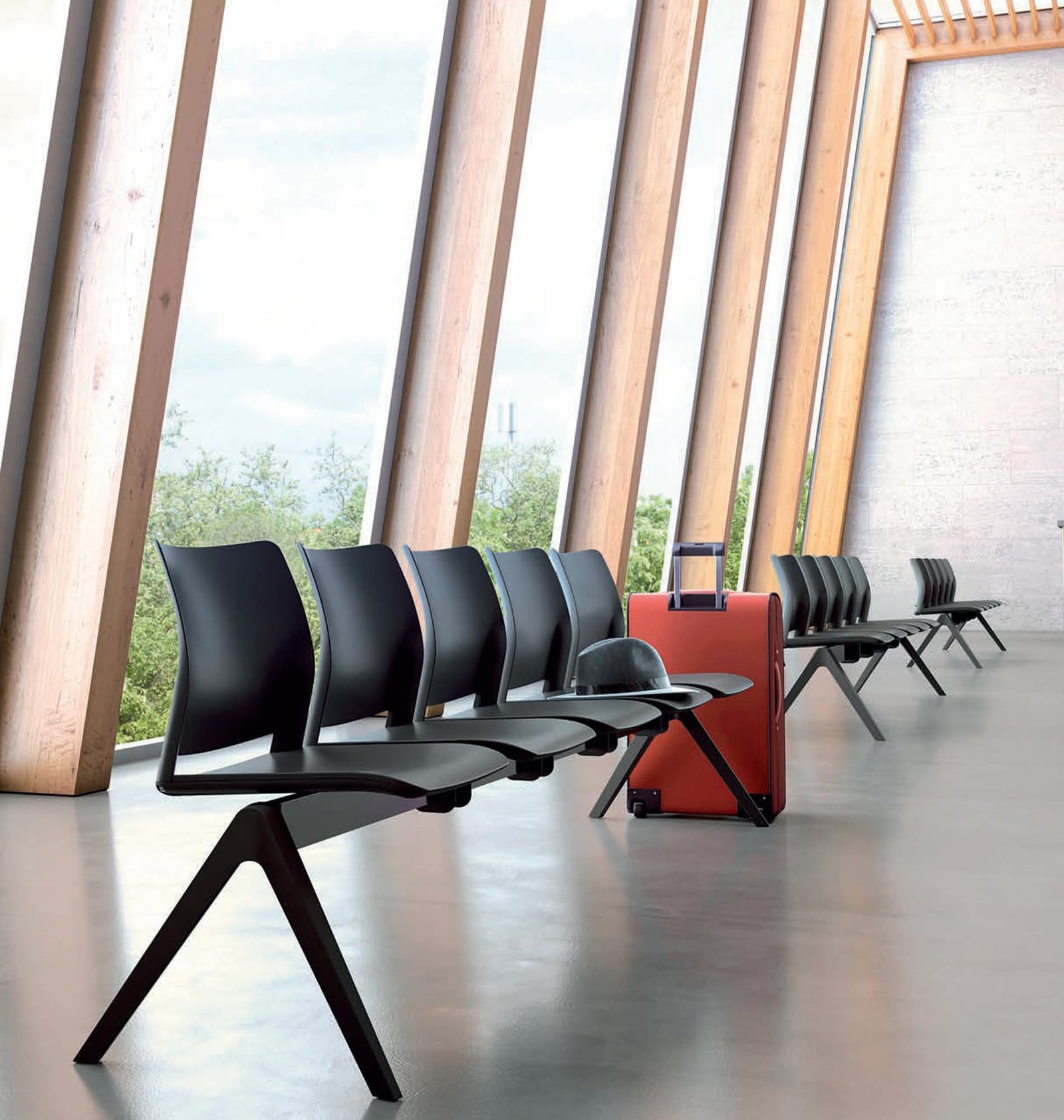
Waiting room chairs are chosen based on three things at once: how many people the space must seat, how often the surfaces are cleaned, and what impression you want to make on the visitor. For high-traffic spaces such as clinics and administrative halls, seating benches with a robust frame and wipeable seats make the most sense, while receptions and entrance areas often call for softer lounge seating. In this guide we go through capacity, materials, durability and maintenance, so you can choose your furniture once and choose it right.
Where waiting room chairs are most commonly used
Seating for waiting areas is not one-size-fits-all. A medical clinic has different requirements than a law office or a car dealership. Before buying, it helps to know what environment the furniture will sit in and how much traffic it will handle.
- Clinics and health centres: wipeable surfaces, a robust frame and easy cleaning take priority.
- Administrative halls and waiting rooms: large capacity, often arranged in rows, which is why multi-seat benches are practical.
- Company receptions and entrance areas: first impressions matter, so softer lounge seating is often chosen.
- Schools and public institutions: durability and resistance to intensive use are key.
- Car showrooms and service centres: a combination of comfort and a representative appearance.
You can find the full range of seating benches and chairs for these spaces in the waiting room and hall chairs collection.
Benches, individual chairs or lounge: what to choose?
This is the first substantive question of every project. Each solution has its place, and the decision depends on the space and the traffic.
Seating benches (2-, 3- or 4-seat) are the best choice when you want to seat many people in one place while keeping a tidy, aligned look. Individual waiting room chairs offer more flexibility, since you can rearrange them, and many are folding or stack into a pile for halls. Lounge seating is the softest and most representative option, suited to receptions where the visitor waits for a longer time.
| Seating type | Best suited for | Advantage | Disadvantage |
|---|---|---|---|
| Seating benches (2-4 seat) | Halls, clinics, high-traffic waiting rooms | Large capacity, tidy look, robustness | Less flexible to rearrange |
| Individual chairs | Smaller waiting rooms, spaces with a changeable layout | Flexibility, stacking, easy to move | Less tidy look in long rows |
| Lounge seating | Receptions, entrance areas, longer waits | Highest comfort, representative appeal | More space per seat, more demanding to clean |
For halls and multipurpose spaces, conference chairs that stack into a pile or fold are often practical too, while for entrance areas lounge seating works well.
Upholstery materials: faux leather, fabric or mesh
The upholstery material is the most important decision for maintenance, especially in clinics and public spaces. Each material has its own strengths when it comes to cleaning and durability.
Faux leather and PU are the most practical for spaces where hygiene is a priority, as the surface is easy to wipe down. Fabric feels warm and dampens sound, but requires more care. Mesh is breathable and suited to chairs where people sit for a longer time.
| Material | Cleaning | Durability under intensive use | Suited for |
|---|---|---|---|
| Faux leather / PU | Wipeable, quick | High | Clinics, public spaces, high traffic |
| Fabric | More demanding, textile cleaning agents | Medium to high (depending on quality) | Offices, receptions, warmer atmosphere |
| Mesh | Easier to clean, breathable | Medium to high | Chairs for longer sitting, warm spaces |
For clinics and healthcare spaces it makes sense to choose wipeable faux leather or PU that can be cleaned regularly. This is not a health claim, simply a matter of easier surface hygiene maintenance.
Durability and frame: what to watch for
A waiting room chair has to withstand far more than a household chair. In a public space, tens or hundreds of people sit down and stand up each day, so the construction and frame are decisive for the lifespan.
- A metal frame withstands intensive use and is the standard for high-traffic waiting rooms.
- Linking benches into rows prevents the chairs from spreading apart and keeps a tidy look.
- Stable legs or glides protect the floor and reduce noise when moving.
- Folding or stacking into a pile is an advantage in multipurpose halls where you occasionally need the space cleared.
With project furnishing, it is also worth considering that the waiting room chairs match the rest of your office furniture, so the space looks cohesive.
How many seats do I need and how do I lay out the space?
Plan capacity based on the average number of visitors present at the same time, not on all-day traffic. A simple rule applies to waiting rooms: a touch too many seats is better than too few, since a standing visitor quickly gets a feeling of disorder.
When laying out the space, leave enough room for passage, wheelchair access and setting things down. Benches along the wall save space, while rows in the middle increase capacity in larger halls. When planning larger spaces, the guide on how to furnish an office also helps, covering layout and floor plan.
- The gap between rows should allow comfortable passage (at least around 80-100 cm).
- Allow a spot for a wheelchair and accessibility.
- Consider the line of sight to the reception or call system.
- For longer waits, add small tables or surfaces to set things down.
Acoustics and comfort in the waiting room
Waiting rooms are often echoey spaces with hard floors and walls. Softer upholstery and textile surfaces partly soften the sound and make waiting more pleasant. If noise is a serious problem, it makes sense to combine seating with acoustic solutions.
We wrote about how sound affects well-being in shared spaces in our guide on acoustics in an open-space office. The same principles apply to larger waiting rooms and halls.
Personalisation and project furnishing
At Heka Interior, most seating benches and waiting room chairs are project products, which means we adapt them to the space and the client's brand. Various fabrics and colours are available, along with the option to add company logos to the upholstery or frame.
As a Slovenian brand of Hit Preless d.o.o., we make furniture in Medvode and have more than 40 years of experience. We handle our own delivery and installation as well as complete project furnishing, from consulting to setup. Our references include NLB with more than 1,200 workstations, Triglav and the Volvo service centre.
- Choice of fabrics, colours and materials per project.
- Option to add logos and personalisation.
- Made in Slovenia and a 3-year warranty.
- Our own delivery and installation throughout Slovenia.
Prices for multi-seat benches and project chairs are usually price on request, as they depend on the configuration, the number of seats and the chosen materials. For larger projects we prepare a custom quote.
Frequently asked questions
Which waiting room chairs are easiest to clean?
The easiest to clean are models upholstered in faux leather or PU, which you simply wipe down. That is why such waiting room chairs are the most common choice for clinics and public spaces where surface hygiene matters.
Are seating benches better than individual chairs for waiting rooms?
It depends on the space. Seating benches accommodate more people in one place and keep a tidy look, so they are better for halls and high-traffic waiting rooms. Individual chairs are more suitable when you need a flexible layout or stacking.
How much does waiting room seating with chairs cost?
For multi-seat benches and project chairs, the price is on request, because it depends on the number of seats, the chosen materials and the configuration. For each project we prepare a custom quote, taking into account the size of the space and the desired look.
Can you customise waiting room chairs to a company's colour and logo?
Yes. Most of our seating benches and chairs are project products, so you can choose the fabrics and colours and add a company logo. That way the waiting room seating matches the overall look of the space.
How to proceed
To choose the right seating, browse the full collection of waiting room and hall chairs, for halls also check the conference chairs, and for receptions the lounge seating. If you are also choosing meeting rooms before deciding on a larger project, the guide on conference chairs for meeting rooms will help.
You can test the chair at your own pace: we offer a 7-day free trial, so you can be sure the chosen model suits your space and visitors. For project furnishing of your waiting room, get in touch and we will prepare a custom quote.


Share:
How long to stand at a standing desk per day
Active ergonomic chair: how to choose the right one