
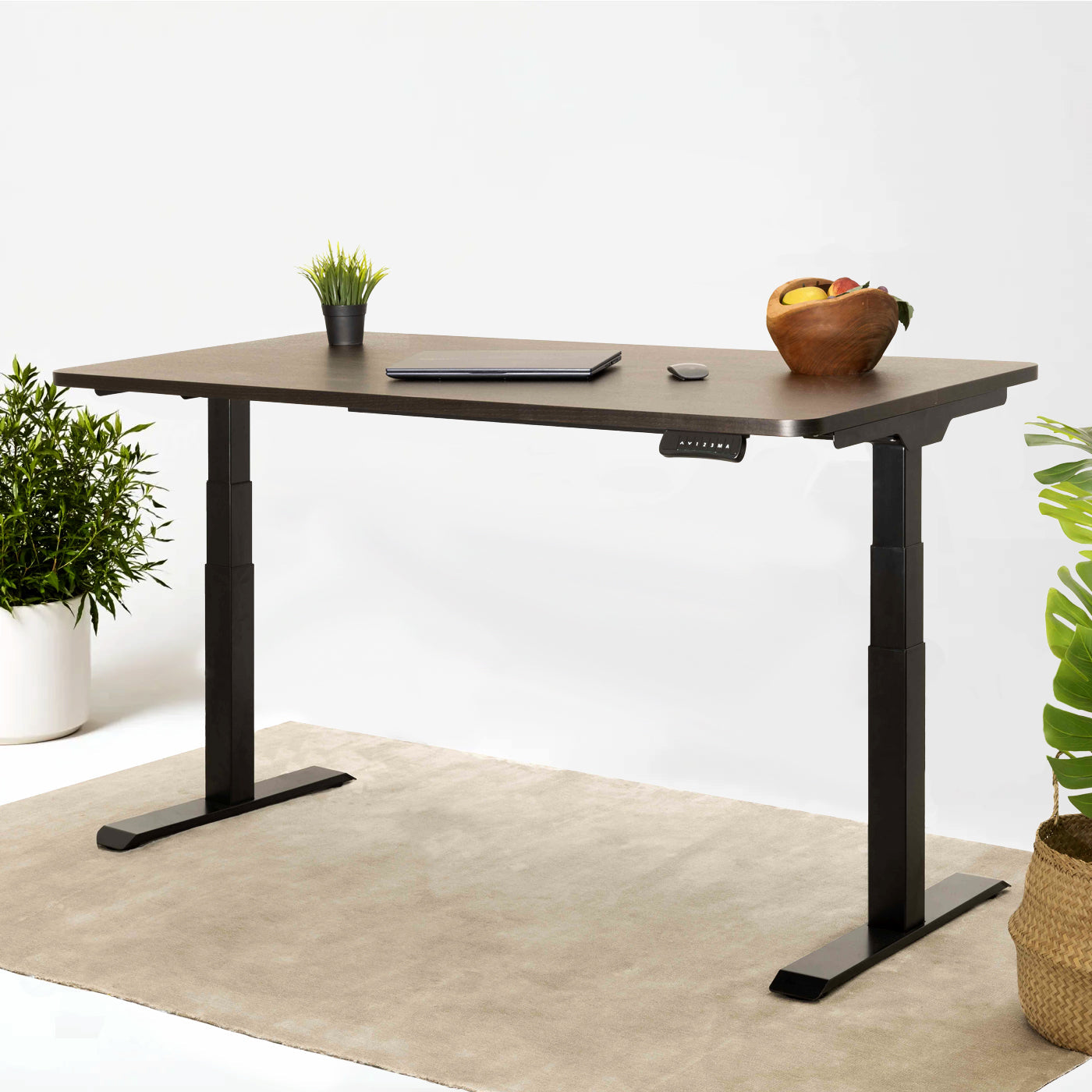
How long should you stand at a standing desk? The general recommendation is not to stand all day, but to alternate sitting and standing throughout the workday. Ergonomic experts often recommend that, at the start, you stand for roughly 1 to 2 hours in total over an 8-hour workday and change position every 30 to 60 minutes. The key is not to stand as long as possible, but to move regularly and avoid staying in the same position for too long.
Below we explain how to start gradually, offer a sample daily schedule, and describe the signs that you have overdone it. This way you will use your standing desk in a way that can relieve the spine and supports good posture, without unnecessary leg fatigue.
How long should I stand at the start?
If you are only just switching to working while standing, start moderately. The general recommendation is to stand for only 15 to 30 minutes at a time during the first few days, a few times a day, and then gradually extend the time. Your body needs a few weeks to get used to the new load on your legs and back.
- Week 1: 2 to 3 times a day for 15 to 20 minutes standing.
- Weeks 2 to 3: longer intervals, around 1 hour of standing per day in total.
- After the first month: around 1 to 2 hours of standing in total, spread across the whole day.
It is important to change position as soon as you feel one posture becoming uncomfortable. A standing desk is not a standing contest, but a tool for more movement during work.
Sample daily schedule for alternating sitting/standing
The table below shows a simple example of how to distribute sitting and standing across an 8-hour workday. It is a rough example that you should adapt to how you feel and to your tasks.
| Time | Position | Duration |
|---|---|---|
| 08:00 - 08:30 | Standing | 30 min |
| 08:30 - 09:30 | Sitting | 60 min |
| 09:30 - 10:00 | Standing | 30 min |
| 10:00 - 11:00 | Sitting | 60 min |
| 11:00 - 11:30 | Standing + short walk | 30 min |
| 12:00 - 13:00 | Lunch break | movement |
| 13:00 - 13:30 | Standing | 30 min |
| 13:30 - 14:30 | Sitting | 60 min |
| 14:30 - 15:00 | Standing | 30 min |
| 15:00 - 16:00 | Sitting | 60 min |
In this example, the total comes to roughly 2 hours of standing, divided into shorter intervals. This is in line with the general recommendation to change position every 30 to 60 minutes, rather than standing or sitting for several hours at a stretch.
You can simplify the schedule with reminders on your phone or in your calendar. Many people choose to stand during phone calls, reading, or meetings, and to sit for precise work that requires a lot of concentration. Once the rhythm becomes a habit, reminders are no longer needed, because your body itself senses when it is time to change position.
Recommendations for beginners and more advanced users
How much standing suits you depends on how used to working while standing you already are. The table below offers a rough guideline.
| Level | Total standing per day | Change interval |
|---|---|---|
| Beginner | 30 min to 1 hour | every 30 min |
| Intermediate | 1 to 2 hours | every 45 min |
| Advanced | 2 to 3 hours | every 60 min |
Even more advanced users should not stand for the whole workday. Long uninterrupted standing can strain the legs and lower back just as much as long sitting. The goal is balance and movement, not a single posture.
The figures in the table are only approximate. How much standing suits you is also influenced by the type of work, your general fitness, and any particular features of your body. If you have any health concerns, consult an expert about an appropriate amount of standing. The most important thing is to progress gradually and not force yourself into overly long intervals just to reach some target number.
Why alternating is better than constant standing
The main advantage of a standing desk is not standing in itself, but the ability to change position regularly. By alternating sitting and standing during work, you:
- change the load on muscles and joints, which can relieve the spine;
- move more often, which breaks up long hours of uninterrupted sitting;
- find it easier to stay focused, since changing position refreshes the body and mind;
- reduce stiffness in the shoulders and neck that builds up from long sitting in the same posture.
You can read more about the benefits in our guide on why working while standing is beneficial and what the advantages of a standing desk are.
Signs that you have overdone the standing?
Your body usually tells you when it is time to sit down again. Watch out for the following signs, which indicate that you have been standing too long:
- fatigue or pain in the legs and feet;
- tension or discomfort in the lower back;
- swelling or a feeling of heaviness in the legs at the end of the day;
- leaning on one leg or frequently shifting your stance because the posture becomes uncomfortable.
If you notice these signs, shorten your standing intervals and sit down more often. Adjust the schedule until you find a rhythm that suits you. Everyone is different, so the best guides are your own well-being and moderation.
Tips for more comfortable standing work
With a few simple adjustments, working while standing will be far more comfortable and sustainable throughout the day:
- Anti-fatigue mat: an ergonomic mat under your feet relieves the legs during longer standing.
- Suitable footwear: choose comfortable shoes with good support; high heels are not suitable for working while standing.
- Correct desk height: when standing, your elbows should be at roughly a 90-degree angle and the screen at eye level.
- Movement: while standing, shift your stance occasionally, stretch your shoulders, or take a short walk to the kitchen.
- Hydration: a glass of water on your desk reminds you to move more often and to drink.
For good posture while sitting, we also recommend a quality chair. Take a look at our ergonomic office chairs, which complement working at a standing desk.
What role does a quality standing desk play
All the recommendations about alternating sitting/standing are only useful if you can adjust the desk quickly and effortlessly. Many people eventually stop adjusting manual crank desks because it is time-consuming. An electric standing desk with a quiet electric motor changes position in a few seconds, which genuinely encourages regular switching.
Our Heka CoreLift standing desk has an electric motor for quick height adjustment, often with a memory function for your favourite positions, so you can switch between sitting and standing at the press of a button. Read more about choosing the right model in our guide on how to choose a standing desk, and find details about the drive in the article on the electric standing desk.
Heka standing desks are made in Slovenia (Medvode, more than 40 years of experience), come with a 3-year warranty, and a free trial is also available so you can check before buying whether working while standing suits you. Prices start from approx. 450 EUR, depending on size and configuration.
Frequently asked questions
Is it harmful to stand all day at a standing desk?
We do not recommend standing for the entire workday. Standing uninterrupted for too long can strain the legs and lower back, much like long sitting. The general recommendation is to alternate sitting and standing and to change position every 30 to 60 minutes.
How long should I stand if I am just starting out?
Start moderately, for example with 15 to 30 minutes of standing at a time, a few times a day. Gradually extend the time over a few weeks until you reach roughly 1 to 2 hours of standing per day in total, always divided into shorter intervals.
How often should I switch between sitting and standing?
The general recommendation is to change position every 30 to 60 minutes. It is best to be guided by how you feel and to change position as soon as one posture becomes uncomfortable. Regular movement is more important than the exact timing.
Does a standing desk replace movement and exercise?
No. A standing desk encourages more movement during work and can relieve posture, but it does not replace walks, stretching, and regular physical activity. You achieve the best effect by combining alternating sitting/standing with movement throughout the day.
Ready for a healthier workday? Take a look at our standing desks and make use of the free trial so you can calmly try out alternating sitting and standing at your own workplace.



Share:
Mesh vs upholstered office chair: which one to choose
Waiting Room Chairs: How to Choose the Right Seating