
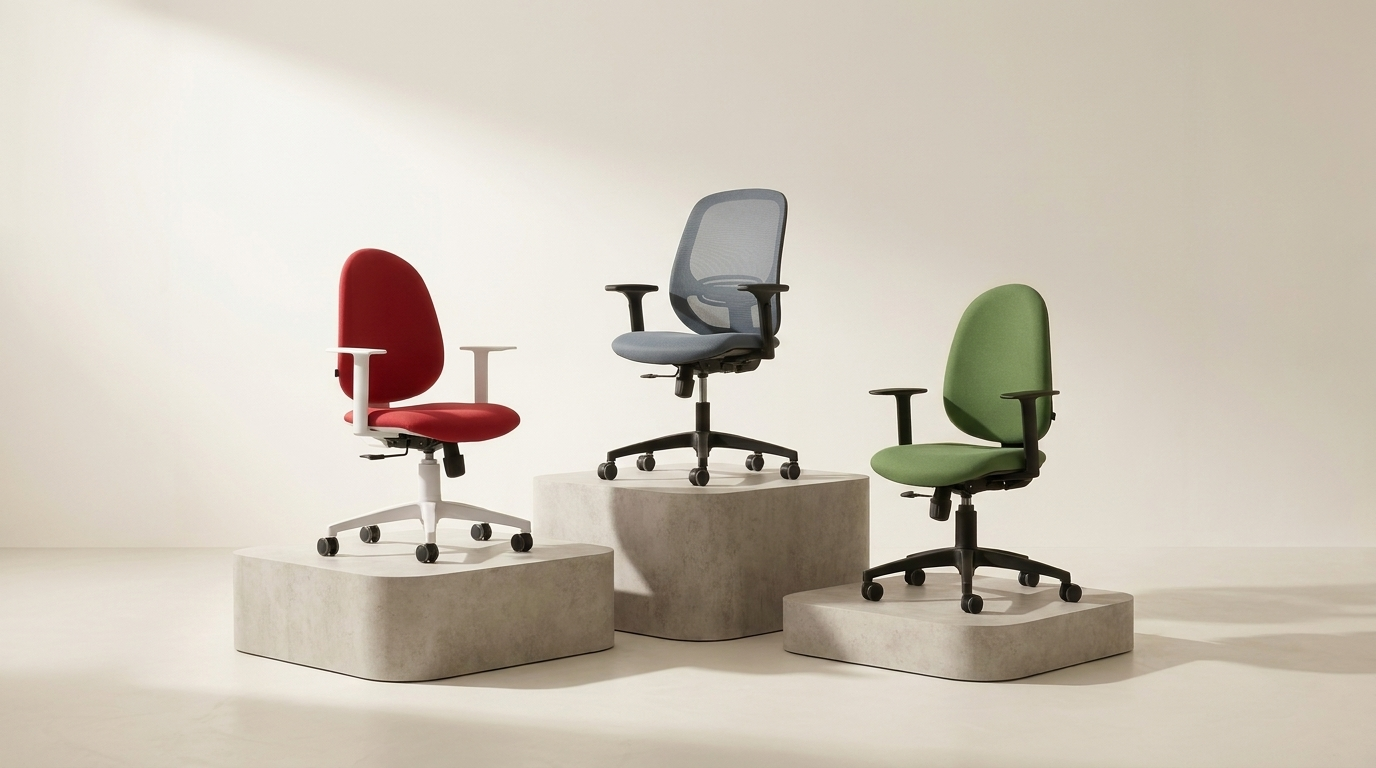
A children's ergonomic chair is a seat that adapts to a child's size and growth, supporting proper posture during learning and homework. The key features to look for are an adjustable seat height, a footrest, a suitable seat depth and lumbar support. The best choice is a chair that "grows with the child" and can be adjusted year after year, instead of one you have to replace soon.
Why Children Need an Ergonomic Chair
Children today spend many hours sitting over notebooks and screens. Homework, reading, drawing and time at the computer quickly add up to whole days of sitting. During growth the body changes rapidly, so an ordinary adult chair or a kitchen chair often does not fit their size. Their feet dangle in the air, their back gets no support, and the child starts to slouch or sit on the edge of the seat.
A children's ergonomic chair is designed to adapt to a child's body and to support proper posture while sitting. This means that:
- the seat height adjusts so that the knees are at roughly a 90-degree angle;
- it has a footrest for when the child cannot yet reach the floor;
- it supports the lumbar region of the back and encourages an upright sitting posture;
- it helps the child focus on learning instead of constantly shifting around.
A good chair is no substitute for movement, so always encourage children to take breaks and stretch. It does, however, support comfortable and focused learning, which is valuable during the school years. A child who sits comfortably and stably can concentrate more easily and stay with tasks longer without restlessness.
Key Adjustments the Chair Should Have
When choosing an ergonomic chair for a child, focus on the adjustment options. The more there are, the longer the chair will fit a growing child. Pay attention to the following:
- Adjustable seat height – so the child can sit with their feet flat on the floor or on a footrest and their knees at roughly a 90-degree angle.
- Adjustable seat depth – there should be about two to three fingers of space between the back of the knee and the edge of the seat.
- Footrest or foot ring – indispensable until the child can reach the floor; ideally height-adjustable.
- Lumbar support – a backrest that follows the curve of the back and encourages an upright posture.
- Adjustable or removable backrest – so it grows with the child and adapts to their height.
- Sturdy construction – the chair "grows with the child" and withstands daily use for several years.
At Heka, two of the most popular children's models are Enjoy and Lenny, which offer several adjustment options so the chair follows the child's growth year after year. When buying, do not rush into the cheapest option without adjustments, since the child will outgrow it within a year or two.
Recommended Height Setting Based on the Child
The table below is a rough guide for setting the seat height according to a child's age and height. Every child is different, so the most important rule is simple: the feet should rest flat on the floor or on a footrest, and the knees should be at roughly a 90-degree angle.
| Child's age | Approximate height of the child | Recommended seat height | Footrest |
|---|---|---|---|
| 6–8 years | 115–130 cm | around 30–35 cm | almost always needed |
| 9–11 years | 130–145 cm | around 35–40 cm | often needed |
| 12–14 years | 145–160 cm | around 40–45 cm | occasionally needed |
| 15 years and older | over 160 cm | around 42–48 cm | usually not needed |
For a comparison of specific Heka models (Betty, Enjoy, Danny, Lenny) and tips on setting up a home study corner, see the guide Children's chairs for learning at home: a parents' guide.
The table is for guidance only. Always set the chair according to the child's actual size and the height of the work desk, not just their age. The best indicator is posture: if the child sits upright, with the back supported and the feet on a footrest, the setting is correct.
Safety and Materials
A children's chair is in daily use, so durability and safety matter. Pay attention to:
- Stability – a five-star base with a wide enough diameter prevents tipping over.
- Braking castors – castors that lock when the child stands up or sits down add safety on smooth floors.
- Quality fabrics – durable, breathable and easy to clean, since children like to leave the odd stain.
- Rounded edges and mechanisms without gaps where fingers could get caught.
Heka makes its chairs in Slovenia, in Medvode, with more than 40 years of experience. You can choose the fabrics and colours to order, which means the chair will suit the child's room and withstand daily use. Because production is in-house, any repair or replacement part is also easy to arrange. We offer a 3-year warranty on our products.
How to Adjust the Chair Correctly for a Child
Even the best chair only helps if it is set up correctly. The procedure is simple and worth repeating every few months as the child grows:
- Feet should rest flat on the floor or on a footrest.
- Knees should be at roughly a 90-degree angle, with the thighs parallel to the floor.
- Back should rest against the backrest, with the lumbar region supported.
- Seat depth should leave about two to three fingers of space between the knee and the edge of the seat.
- Elbows should rest comfortably; match the desk height to the chair so the shoulders stay relaxed.
Invite the child to take part in the adjustments, so they learn to check their own posture. Read more about proper posture while learning and working in our guide on how to sit properly at the computer.
A Chair That Grows With the Child, Paired With a Desk
Over a few years a child grows by several dozen centimetres. A chair with plenty of adjustment options adapts to their growth, so it does not need to be replaced often. In the long run this is also a more economical choice, since one quality chair replaces two or three cheaper ones.
The chair is only half of the workstation. For the child to sit properly, the desk also needs to be the right height. The ideal solution is a desk that adapts, for example sit-stand desks or classic writing desks in a suitable size. Together with a correctly adjusted chair, they create an ergonomic learning station that supports proper posture throughout the school years.
When choosing a chair for the adult members of the family, our general guide on how to choose an office chair will also help. Many of the principles that apply to office chairs apply to children's chairs too.
Seasonal Purchase Before the School Year
September is a natural moment to set up a study corner. Before the start of the school year a child often gets a new desk, shelves and school supplies, so this is a great opportunity to take care of the right chair as well. A new chair at the start of the year gives the child a sense of a fresh start and a nice workstation.
Tip: buy the chair together with the child or try it out at home before purchasing. Heka offers a 7-day free trial so you can make sure the chair suits the child's size and the work desk. This way you avoid guesswork and can order the chair with peace of mind. In-house delivery and assembly mean the chair is ready to use without any extra worries.
Frequently Asked Questions
When should a child get their first ergonomic chair?
An ergonomic chair makes sense as soon as a child begins to sit regularly at a desk, that is with their first school tasks at the age of six or seven. The key is that the chair allows height adjustment and offers a footrest, since at that age children cannot yet reach the floor.
How do I know the chair is set up correctly?
The chair is set up correctly when the child has their feet flat on the floor or on a footrest, their knees at roughly a 90-degree angle and their back resting against the backrest. There should be about two to three fingers of space between the knee and the edge of the seat.
When does a children's chair need to be replaced?
The chair does not need to be replaced as long as you can adjust it so the child sits properly. Replacement makes sense when the child outgrows the highest seat setting or when the chair no longer fits their size and work desk. A chair with plenty of adjustment options therefore lasts longer.
How much does a children's ergonomic chair cost?
Prices for Heka children's ergonomic chairs start from approx. 150 euros, depending on the model, the chosen fabric and the custom colours. Before deciding, you can try the chair at home through the 7-day free trial.
Does a children's ergonomic chair really help with posture?
A correctly chosen and adjusted chair supports proper posture while sitting and relieves the back, as it gives the child stable support for the legs and back. It is important to combine the chair with a desk of the right height and to encourage the child to take regular breaks and move around.
Try the Heka Children's Chair at Home
The easiest way to choose the right chair is to try it. Take a look at our range, where we have gathered children's ergonomic chairs that grow with the child and are made in Slovenia. Take advantage of the 7-day free trial, in-house delivery and assembly, and a 3-year warranty, and make sure your child sits properly before the new school year.



Share:
Office Chair for Higher Loads: How to Choose
Workplace Ergonomics: Standards and Requirements